Sustainable Marketing Agency Discusses Investing in Biochar with Impact Venture
Hot take — companies that are done treading water (surviving) and are ready to do more (thriving) will start to look outward and think about how they fit into their communities; not just in the business context but the social and environmental context. That’s what’s happening here at PAPER & PAGE.
After five years in the creative marketing and PR industry, our Bangkok-based agency took steps to consider how we can be more sustainable as a service company. Better still, how can we contribute to our community?
That was our rationale when we decided to invest in the Warm Heart Foundation’s carbon offset project. To learn more about the project, we sat down with Kwanpiromtara “Aom” Suksri, Thailand Country Manager of the Warm Heart Foundation and its impact venture, Biochar Life, to talk about the ins and outs of biochar and how it benefits Thailand’s agricultural sector.
Key Points:
- Biochar Life is an impact venture that produces biochar in Kenya, Malawi, and Thailand, Tanzania, and Indonesia.
- Producing and burying biochar is a carbon negative process and contributes primarily to Sustainable Development Goal 13: Climate Action.
- Biochar can also be used as a soil additive to improve soil quality and water retention.
- Biochar is especially relevant in Southeast Asia, where farmers regularly perform open-air agricultural burning to clear crop residue and seasonal haze has become a public health crisis.
 Source: Biochar Life Facebook Page
P&P: How do you source the biomass needed for biochar production?
Aom: The two key sources of biomass that our team uses are longan and corn cob. For the longan, we do not cut down trees, but rather, we use branch trimmings provided by farmers in the area.
P&P: What specific agricultural practices can benefit from the application of biochar?
Aom: There are three specific ways that agriculture benefits from the application of biochar: it enhances soil, increases crop yields, and reduces water consumption.
P&P: How does biochar compare to other soil additives or fertilizers?
Aom: What is fundamentally unique about biochar is its ability to change the soil structure. It helps the roots to grow by allowing air to enter the soil. The soil’s capacity to hold water is also improved. Biochar can also perform well in new ecologies, unlike other soil additives or fertilizers.
When we experimented with rice, we saw a major increase in crop yields. When we shared the extra rice with our neighbors, that piqued their interest in biochar and led them to increase their crop yield from 600–800 kg/rai to 1,000 kg/rai.
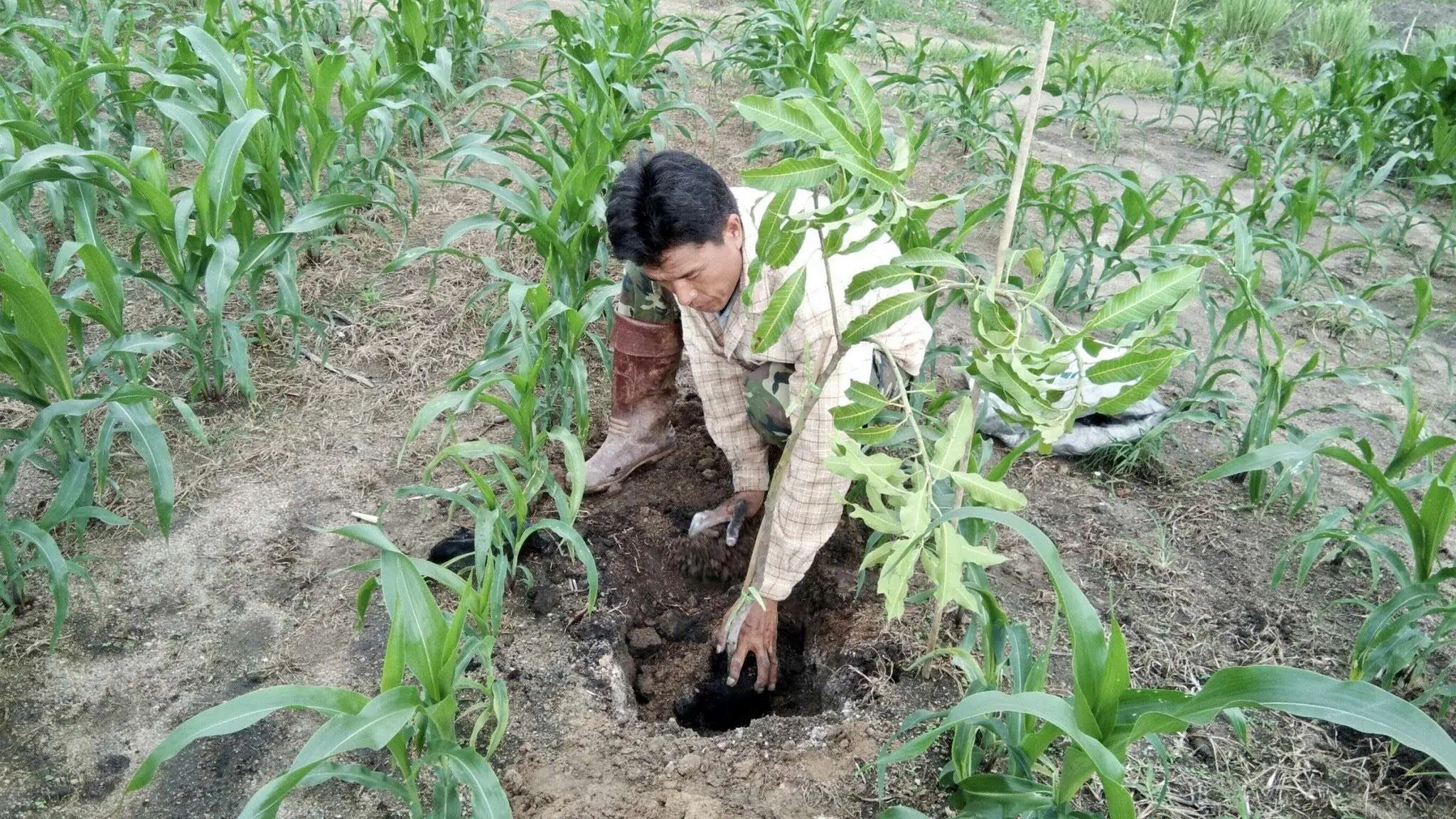 Source: Biochar Life Facebook Page
P&P: Of course, it’s not as simple as just burying it in the ground. Are there any specific guidelines or best practices for using biochar in different soil types?
Aom: Do not use plain biochar — it should be “activated” by mixing with manure or microbes for long-term soil quality improvement to avoid leaching from the existing soil. The biochar should also be mixed deeper into the soil and not simply on the surface.
P&P: What challenges can farmers or land managers face when incorporating biochar into their practices?
Aom: Labor is a limiting factor. Farmers tend to be old because the agriculture sector finds difficulty retaining younger farmers. Profit margins within the country are slim, and agriculture work overseas is more lucrative, so farmers tend to work overseas and send remittances home.
P&P: In your opinion, what role should a sustainable company play in the broader community or industry?
Aom: I believe that a sustainable company with greater resources should act as a trendsetter and influencer, using their platform as an opportunity to inform, educate, and motivate smaller firms to practice more sustainable approaches. If we have good role models, then people want to follow. If you want to make a movement, then you should lead the change.
Carbon credits are helpful for supporting the initiative, but we would like to see more consumption of biochar as a product to prevent agricultural burning and for government units involved in public landscaping, which consumes a lot of water, to use biochar to improve water retention. While farmers may use and produce biochar the most, they don’t have the financial means to scale the sequestering of carbon and putting biochar in the ground.